
01
Structure is not bureaucracy.
A workspace holds projects. Projects hold tasks, sprints, and modules. The hierarchy is shallow on purpose (three clicks, never seven) but it's there, because shape is what lets a team know where the work lives.
Ithura is a calm, structured workspace for tasks, projects, sprints, and the talking that carries them. No panic dashboards, no “AI” doing your thinking for you, no metrics that aren’t really measuring anything.
A workspace holds projects. Projects hold tasks, sprints, and modules. The hierarchy is shallow on purpose (three clicks, never seven) but it's there, because shape is what lets a team know where the work lives.
There are no streaks, no leaderboards, no “you haven't been active in 3 days” emails. Notifications batch. The sidebar is quiet. The home page shows what's yours, not what's loud.
Your work is never held hostage. Export everything at any time: tasks are JSON, pages are HTML, you take it with you. No vendor lock-in, no proprietary file formats, and no exit fees when you outgrow us.
Every piece has a name, a place, and a reason for being there. Nothing is added because a competitor has it; nothing is removed to be intentionally minimal. The shape below is what we use ourselves, every day.
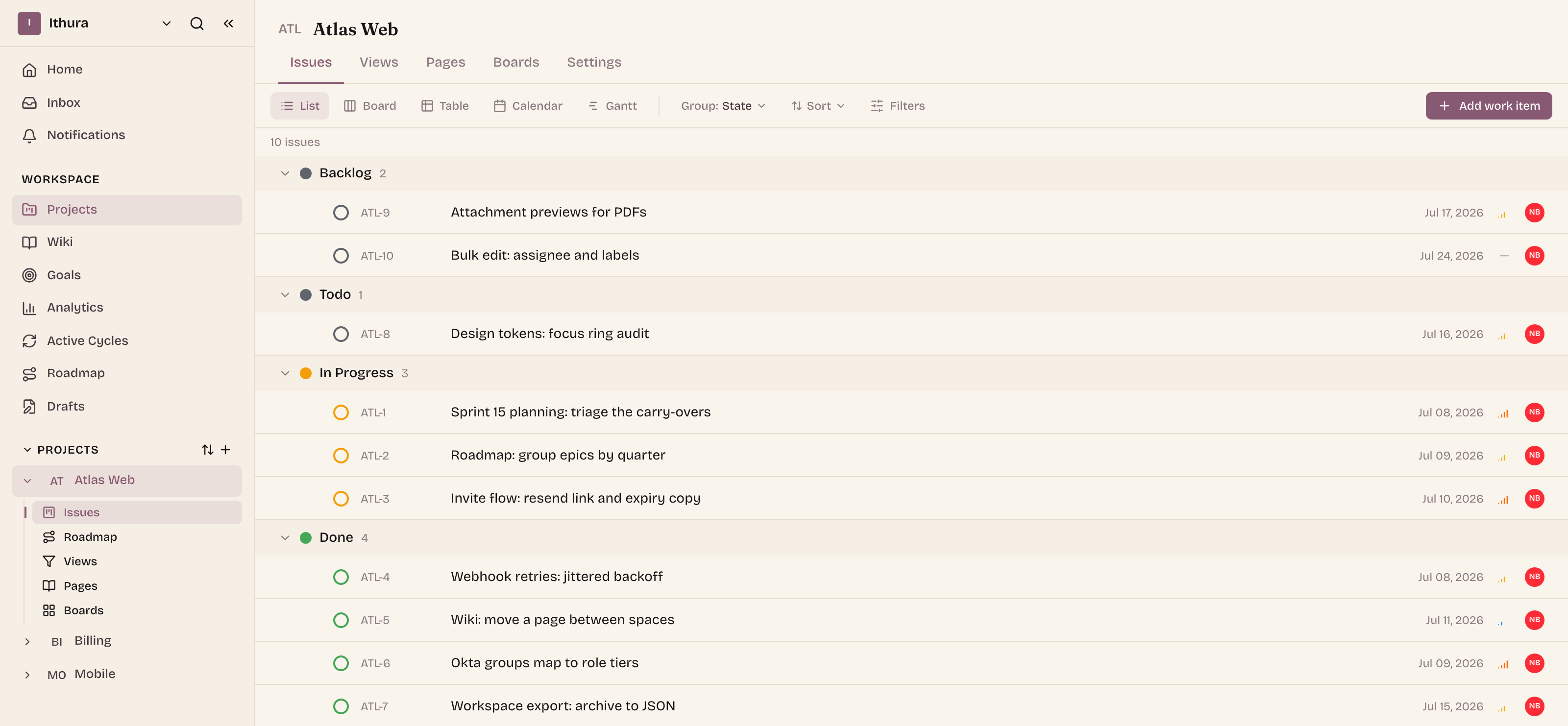
Nine specimens from our own workspace: the drawing carries the idea, the capture beside it is the real product, live and unretouched. The numbers match on purpose.
Every task lives in a project, with states, priorities, and assignees. Group, filter, and save the view: list, board, table, calendar, or gantt, per project.
Time-bounded chunks of work with burn-down, throughput, and time-in-state. No vanity metrics, no engagement scores. Just the rings the work leaves behind.
Themes that run through sprints the way veins run through a leaf. One module gathers its tasks wherever they sit, without moving anything.
The workspace wiki is a real editor: tables, code blocks, embeds, slash commands, and live collaborative cursors. Pages are HTML on the wire, so what you write stays yours.
A shared canvas beside the tracker: sticky notes, sketched shapes, and flows. Map the bed before you plant it, then link the shapes to real work items.
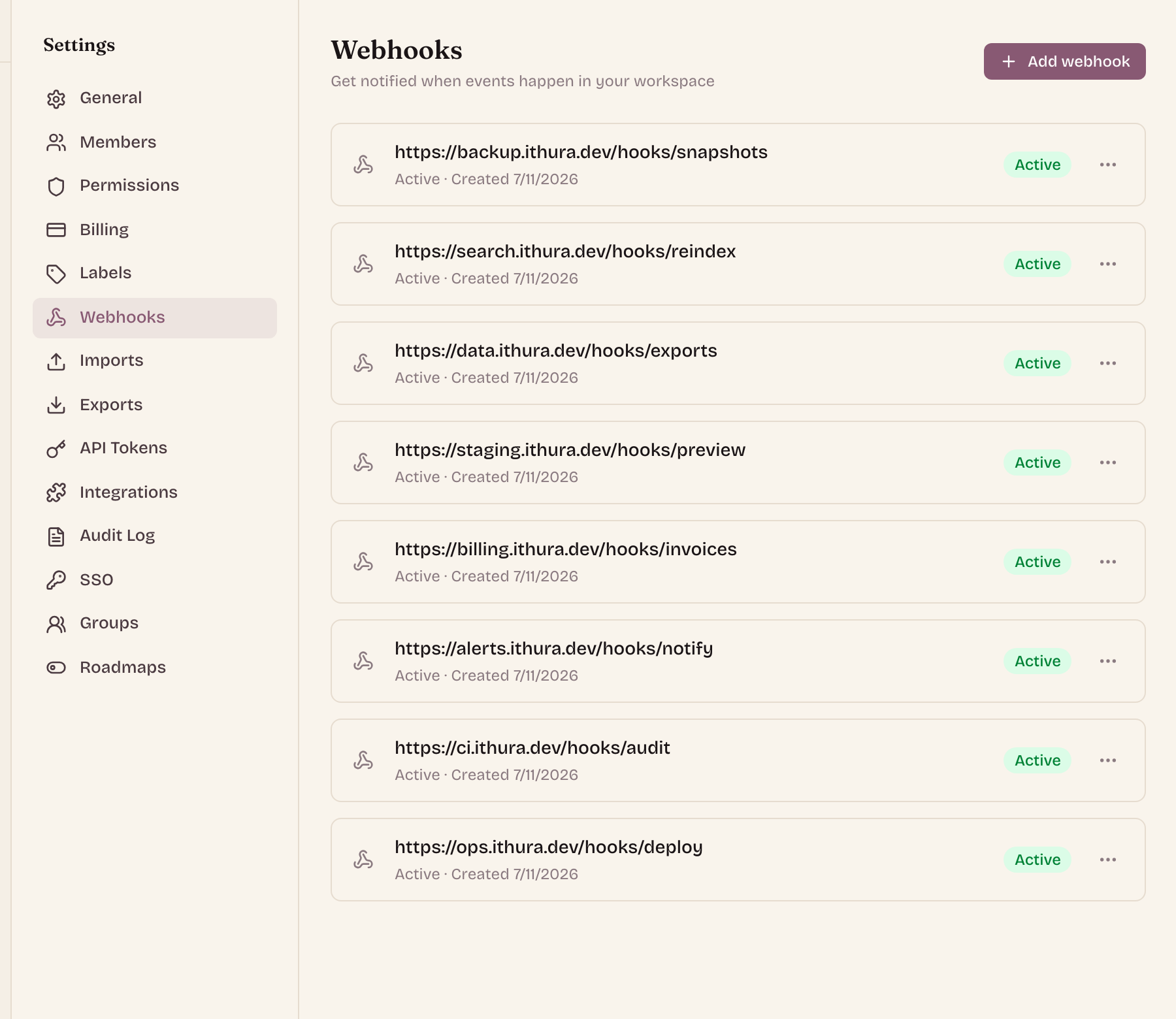
HMAC-signed webhooks for every state change, five retries with backoff, and scoped API tokens. Build the integrations you actually need.
Google, GitHub, GitLab, Okta. Three role tiers, admin, member, and guest, with project-level overrides. Your directory, joined to our stem.
Channels per workspace and per project, direct messages, and threads. Type a task identifier and it becomes a live chip; type a slash command and the message becomes a real task, or a call. Free on every plan.
Audio and video from any task, sprint, board, or channel, in a dock that survives navigation. Presenting sends everyone your place in the app rather than a rectangle of pixels, so they arrive on the same board and can still click.
A message becomes a task without leaving the thread. A call starts on the task it is about. A page keeps itself current. Nothing here is an integration you have to wire up: it is one workspace, so the pieces already know about each other.
The work remembers the conversation that made it.
“The best project tools get out of the way. They give you a place to put things, a way to find them again, and the quiet to do the work.”
Every workspace starts with a free 14 day trial of Pro, no card required, and can stay on Free forever. Starter covers the essentials. Pro is the whole product plus the security baseline: SSO, audit, custom roles, and Huddles video calls included, not walled behind Enterprise. Enterprise adds SCIM, call recording, E2EE, governance, and org-wide controls. Every price is on this page, including Enterprise.
A real workspace, sized for one or two.
The essentials for a small team.
The whole product, plus security.
Governance and scale, published price.